Championing Future Mobility and Energy Transition at COP29
by Amin Mustafa
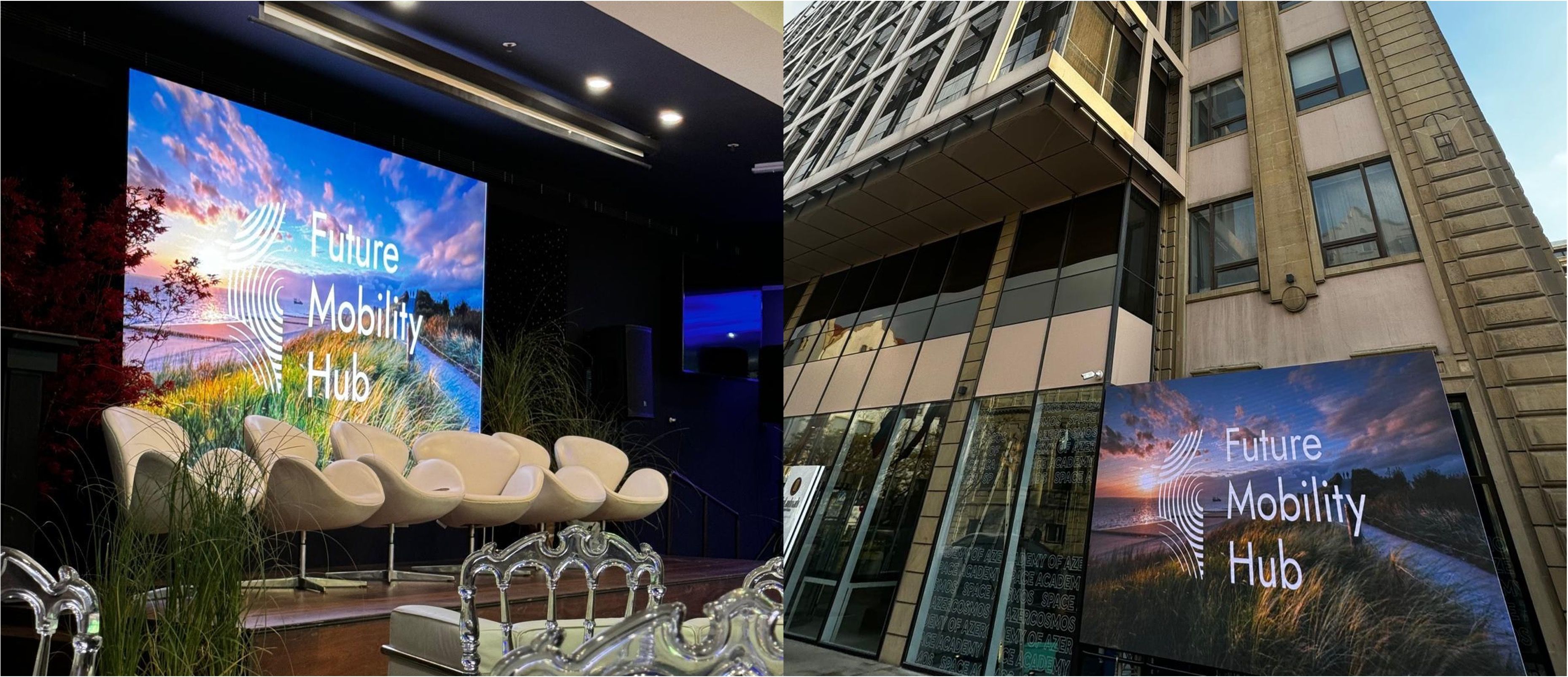
Our signature event, the Future Mobility Hub, continued its impactful journey at COP29 in Baku, Azerbaijan, following its inaugural launch at COP28 in Dubai.
The first event featured global leaders like Alejandro Agag, Founder and Chairman of Formula E, and multinational partners such as General Motors. It established the Future Mobility Hub as the pivotal gathering place outside of the blue and green zones, bringing together global business leaders, industry organizations, government and non-government officials, investors, innovators, and thought leaders for an array of events and networking opportunities.
At COP29, the Future Mobility Hub, hosted by our partner Hub Culture, made a significant return, reaffirming its role as a catalyst for transformative discussions on mobility innovation, energy transition, and the role of technology in combating climate change. The Hub served as a dynamic platform within The Hub Culture Climate Pavilion, bringing together innovators, policymakers, and industry leaders to explore actionable solutions for a sustainable future.
Influential organizations such as Hedera, UN Global Compact Brazil, Evercity, and the Ocean Climate Fund joined this year’s Hub, underscoring its position as a nexus for thought leadership and strategic partnerships. Highlights included the Chief Sustainability Officers Breakfast, where senior executives exchanged ideas on business-led approaches to advancing the energy transition.
Pioneering Conversations at COP29
The Hub Culture Climate Pavilion also hosted high-profile sessions such as the Hedera Regenerative Finance Forum, the UN Global Compact Brazil session, and the Ocean Climate Fund Community Session. These events provided a collaborative space to advance critical topics such as carbon disclosure, regenerative finance, and sustainable development.
As global stakeholders intensify efforts to meet climate targets, the Future Mobility Hub exemplifies the power of collective action and cross-sector collaboration. Building on the momentum from Dubai and now Baku, it continues to inspire meaningful progress in sustainable mobility and energy transition, shaping the path toward a resilient, low-carbon future.